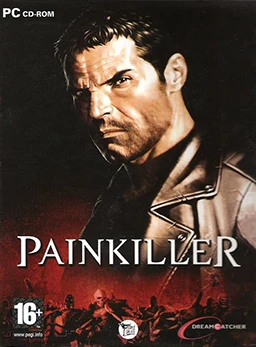
The Soul
A liminal realm where the soul is both battlefield and prize.

The Soul is a location within the Painkiller franchise, a first-person shooter series developed by People Can Fly. It functions as a realm tied to the game's central themes of demonic invasion, the afterlife, and the eternal struggle between the living world and infernal forces. In the broader Painkiller mythology, the soul represents the boundary between the mortal plane and the domains of demons, and The Soul as a place embodies that liminal, spiritual space where the rules of physics and reality bend under supernatural influence.
Within the gameplay experience, The Soul serves as one of the environments through which the player—controlling Pain, the demon hunter—must navigate, combat waves of demonic enemies, and progress through the narrative. Its atmosphere and visual design lean heavily into the franchise's signature blend of gothic horror, visceral action, and dark fantasy.
- Franchise
- Painkiller
- Type
- Location / Realm
- Developer
- People Can Fly
- Genre
- First-person shooter
- Thematic role
- Afterlife / spiritual boundary
- Protagonist context
- Pain (demon hunter)
Lore & Background
In the Painkiller cosmology, the soul is not merely a spiritual abstraction but a tangible force that demons seek to corrupt and claim. The Soul as a location represents the inner architecture of that force—a space where the intangible becomes navigable, where the weight of a person's spirit manifests as terrain, obstacles, and enemies. It is a place that exists in the cracks between the world Pain defends and the hells he invades, a threshold realm that shifts and warps as the demonic pressure mounts.
The visual and narrative language of The Soul draws on the franchise's established aesthetic: grotesque organic architecture, rivers of molten or spectral substance, and a pervasive sense of spiritual decay. The environment is not static; it responds to the player's presence, reflecting the inner turmoil and violence that define the Painkiller experience. Souls trapped or lost within this realm become the very enemies the player must confront, blurring the line between combat and exorcism.
The Soul's narrative significance lies in its role as a reminder that the war in Painkiller is not only physical. Demons do not simply occupy territory; they consume identity, memory, and the essence of what makes a person whole. The Soul, as a place, externalizes that consumption, making the intangible threat of spiritual annihilation something the player must physically fight through.
In Their Own Story
The corridor of the Soul does not end. Pain has learned this the hard way—every time he rounds a bend expecting the next checkpoint, the next wave, the next exit, the architecture simply continues, folding inward like a throat swallowing. The walls breathe. Not metaphorically. They expand and contract with a slow, wet rhythm, and the floor beneath his boots is warm, almost alive, as though he is walking on the inside of something vast and dreaming.
A wisp of spectral light drifts past, trailing the faint sound of a name being spoken—his name, or someone else's, it is hard to tell. The Soul does not distinguish. It holds everything it has ever swallowed. Pain raises his weapon, feels the familiar hum of energy in the barrel, and fires into the dark. The sound does not echo. It is absorbed, the way the place absorbs everything. He keeps moving. The corridor keeps breathing. And somewhere ahead, in the wet dark, something that was once a person turns to watch him pass.
Reader's Guide
The Soul presents a visually distinct environment within the Painkiller levels, characterized by organic, almost fleshy architecture. Walls resemble layered membrane or bone, veined with pulsing bioluminescent channels. The color palette shifts between deep indigo, sickly amber, and the pale glow of trapped spirits drifting through the air. The atmosphere is thick, oppressive, and quiet in a way that contrasts sharply with the more explosive, industrial hellscapes found elsewhere in the franchise.
Gameplay in The Soul emphasizes close-to-mid-range combat. Enemies here tend to be spectral or corrupted—less armored, more numerous, and prone to swarming in tight corridors. Hazards include environmental traps tied to the soul-theme: areas where the ground gives way into a void of drifting light, or zones where the player's health regenerates slowly as if the environment is drawing it out. The pacing is deliberate, trading the open arenas of other levels for claustrophobic, atmospheric corridors.
Narratively, The Soul functions as a transitional or reflective space, often appearing at a midpoint in the game's structure. It is where the story pauses to remind the player that the war is personal. Hidden secrets in this area are subtle—small alcoves containing lore fragments, or environmental details that reward close inspection, consistent with the franchise's tradition of rewarding players who look beyond the immediate firefight.
Did You Know?
- The Painkiller franchise, developed by People Can Fly, is known for its over-the-top demon-slaying gameplay and a protagonist, Pain, who embodies the genre's most visceral action design.
- The 2005 Painkiller title and its 2011 sequel, Painkiller: Resurrection, both featured the soul and afterlife as central thematic elements in their level design and narrative.
- The 2022 Painkiller reboot returned to the franchise's roots with a modernized take on the same core premise: a lone demon hunter fighting through waves of infernal enemies in varied environments.
- People Can Fly, the developer behind the Painkiller series, is also known for Gears of War and Bulletstorm, establishing a reputation for high-octane first-person action.
More in World & Locations
Elsewhere in the Painkiller universe
Spotted an error? Know more?
This is a living reference — every entry is fact-audited, and reader corrections feed straight into our audit queue. Suggest an edit · See this site's audit record