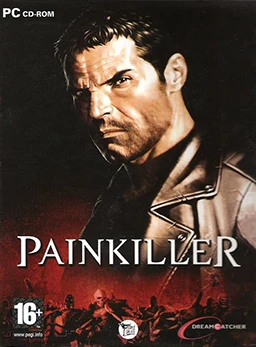
The Blood
A realm where the ground itself bleeds and every step is a wound.

The Blood is a visceral, blood-soaked realm within the broader Hell setting of the Painkiller video game franchise. It functions as one of the hellscape zones the Hellwalker must traverse, characterized by rivers of crimson, fleshy terrain, and an oppressive atmosphere of saturated gore. It serves as both a combat arena and a thematic anchor for the franchise's signature blood-based mechanics.
Across the Painkiller titles, The Blood represents the raw, unfiltered cruelty of the demonic realm — a place where the environment itself seems to pulse and bleed. It is less a single fixed map than a recurring visual and mechanical motif: a zone where healing, aggression, and the boundary between flesh and stone dissolve into a single red landscape.
- Franchise
- Painkiller
- Type
- Hellscape realm / combat zone
- Setting
- Hell (the Abyss)
- Associated mechanic
- Blood-based healing and resource systems
- Thematic role
- Embodiment of Hell's raw, fleshy cruelty
- Recurring across
- Multiple Painkiller titles
Lore & Background
In the cosmology of the Painkiller universe, Hell is not a single flat plane but a layered, shifting expanse of torment. The Blood occupies one of these layers — a stratum where the demonic architecture has eroded into something almost organic. Walls weep crimson. The floor is a membrane of muscle and sinew. Pools of coagulated blood replace water, and the air carries the iron tang of fresh slaughter.
The Blood is not merely a backdrop; it is narratively tied to the Hellwalker's purpose. The demons that dwell here feed on the blood of the damned, and the very environment is a byproduct of that consumption. To walk through The Blood is to walk through the aftermath of an endless, grinding violence that has no beginning and no end. The Hellwalker does not conquer this place so much as cut a path through a wound that never closes.
The franchise uses The Blood as a thematic counterpoint to the more structured, architectural hellscape areas. Where other zones feature gothic spires, iron gates, and infernal machinery, The Blood strips all of that away and leaves only flesh, fluid, and the raw kinetic energy of combat. It is where the game's most aggressive, close-quarters encounters tend to take place, and where the blood-drinking healing mechanic feels most thematically justified.
In Their Own Story
The Hellwalker's boots sink into the membrane-floor and the ground shudders, as if something vast beneath it shifted in its sleep. A river of thick, slow-moving blood cuts across the pass, its surface rippling with each footstep of the demons that flank the path. The air is hot, wet, and tastes of copper. Somewhere ahead, a horn sounds — low, wet, like a throat clearing. The Hellwalker raises the weapon. The Blood does not care who walks through it. It only cares that they bleed.
Reader's Guide
Visually, The Blood is defined by a saturated red-and-crimson palette, fleshy terrain textures, and environments that read more like the interior of a living organ than a constructed dungeon. Surfaces glisten with moisture. Pools of dark red liquid reflect the ambient light. The overall atmosphere is claustrophobic, wet, and aggressively visceral — a deliberate contrast to the drier, more architectural hellscape zones in the same game.
Gameplay in The Blood tends to emphasize close-to-mid-range combat against swarms of lesser demons and the occasional larger brute. Hazards include blood pools that may slow movement, environmental blood-spray effects that obscure visibility, and tight corridors that funnel enemies into the player's space. The blood-drinking healing mechanic — a signature of the franchise — feels most natural here, as the environment itself is a resource.
Narratively, The Blood marks a shift in tone: the Hellwalker has moved past the outer gates of Hell and into its more organic, less structured depths. It signals that the enemy is no longer holding a line but is part of the landscape itself.
Fans have noted that certain blood-pool placements in The Blood double as visual guides, leading the player's eye toward hidden alcoves or alternate routes. The organic, non-geometric layout also means that some wall angles appear solid but are in fact passable, a design choice that rewards close inspection of the fleshy terrain.
Did You Know?
- The blood-drinking healing mechanic that is central to the Painkiller franchise feels most thematically at home in The Blood, where the environment itself is composed of the same substance.
- The Blood's organic, non-geometric architecture contrasts deliberately with the more gothic, structured hellscape zones, shifting the player's sense of spatial logic.
- Across multiple Painkiller titles, the blood-soaked aesthetic of The Blood has become one of the franchise's most recognizable visual signatures in promotional art and key artwork.
- The Hellwalker's journey through The Blood is framed not as conquest but as passage — the realm is a wound in Hell's body, and the player is cutting through it.
More in World & Locations
Elsewhere in the Painkiller universe
Spotted an error? Know more?
This is a living reference — every entry is fact-audited, and reader corrections feed straight into our audit queue. Suggest an edit · See this site's audit record