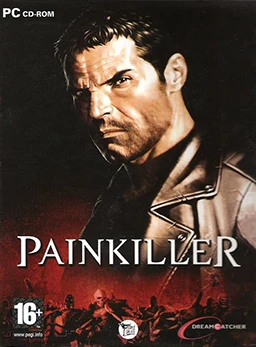
The Throne of Hell
The Hell Knight's blade meets the seat of eternal damnation.

The Throne of Hell is a climactic location within the Painkiller first-person shooter franchise, developed by PeopleCanFly. Set deep within the demonic realms that form the series' primary battleground, it represents the seat of power toward which the Hell Knight's campaign ultimately drives. The setting embodies the franchise's core fantasy: a lone, heavily armored warrior pushing through waves of infernal enemies toward a final confrontation at the heart of Hell itself.
As a campaign destination, the Throne functions as the narrative and mechanical apex of the player's run through the hells. It consolidates the series' themes of righteous violence, demonic hierarchy, and the Hell Knight's almost mythic role as a weapon forged beyond mortal comprehension, aimed squarely at the powers that hold dominion over the damned.
- Franchise
- Painkiller
- Developer
- PeopleCanFly
- Genre
- First-person shooter
- Setting
- Hell / demonic realm
- Protagonist archetype
- Hell Knight
- Core combat style
- Fast-paced melee and ranged combat against demonic hordes
Lore & Background
In the Painkiller mythos, Hell is not a single place but a layered, almost geological structure of torment, each stratum ruled by its own hierarchy of demons and dark lords. The Hell Knights are not human in any conventional sense; they are warriors forged or transformed for a singular purpose—to be hurled into the deepest pits of the infernal and carve a path of destruction upward. Their armor is part of their identity, and their weapons are extensions of a violence that predates the mortal world.
The Throne occupies the apex of this hierarchy. It is where the ultimate authority of Hell is seated, where the architecture of the realm shifts from brute, fleshy horror to something colder, more deliberate, more architectural. The approach to the Throne is the campaign's final act: the Knight has already broken through lesser hells, shattered the forces of mid-tier demons, and bled through corridors of fire and bone. What remains is the seat itself, the figure or force that sits upon it, and the final exchange of blows that defines the franchise's tone—relentless, over-the-top, and deeply personal.
The broader world beyond Hell in the Painkiller games is one where the boundary between the mortal plane and the infernal is thin, permeable, and constantly under siege. The Hell Knight's victories are not merely personal triumphs; they are necessary interventions that prevent the hells from spilling their contents into the world of the living. The Throne, as the source of that pressure, is the point where the stakes shift from survival to existential defense.
In Their Own Story
The corridor opens into a vast, vaulted chamber where the air itself seems to press against the Knight's visor. Every surface is carved with the faces of the damned, mouths frozen mid-scream, eyes tracking the intruder with a patience that outlasts centuries. At the far end, the Throne rises from a floor of fused bone and black iron, its backrest shaped like a crown of horns that pierces the low ceiling. Something sits there. It does not stand. It does not rise. It simply turns its gaze, and the Knight feels the weight of every hell he has already walked press down on his shoulders like a physical hand. He draws his blade. The metal sings. The thing on the Throne smiles with too many teeth, and the first wave of demons peels itself from the walls like a living tide. The Knight steps forward. There is no other direction to go.
Reader's Guide
The campaign builds toward the Throne through escalating hell-strata. Early levels establish the core loop: sprint, chain-slash, fire, repeat, with enemy variety gradually expanding from basic imps to armored brutes and ranged archers. Each level's architecture funnels the player through chokepoints, open arenas, and vertical sections that reward mobility and punish hesitation.
As the Knight approaches the Throne, the design shifts. Corridors widen into grand halls. Enemy density increases but individual enemies become less numerous, giving way to larger, more deliberate foes. The pacing slows slightly to let the player feel the weight of the space, the scale of what sits at the end.
The Throne itself is the narrative payoff: the figure or force seated there represents the source of the demonic pressure that threatens the mortal world. The final confrontation is not merely a boss fight but a statement of the Knight's purpose—every hell traversed, every demon cut down, was the price of reaching this single seat. The mythology frames the Knight not as a hero in the traditional sense but as a weapon, and the Throne is what that weapon was built to break.
The broader stakes extend beyond the immediate battle. The hells are not isolated; they press against the mortal plane. The Knight's victory at the Throne is a temporary reprieve, a holding action in a war that has no true end. This is what gives the franchise's over-the-top violence its underlying gravity: the Knight is not playing. He is holding the line.
Did You Know?
- PeopleCanFly, the studio behind the Painkiller series, is known for emphasizing fast, fluid melee combat as a core pillar alongside traditional gunplay, a design choice that distinguishes the franchise from most other fi
- The Hell Knight concept in Painkiller draws on the visual language of heavy medieval plate armor and chain weapons, creating a protagonist design that reads more like a dark-fantasy paladin than a conventional soldier.
- The Painkiller franchise spans multiple entries across different publishers, including Activision and Devolver Digital, with the 2022 title published under the Embracer Group umbrella.
- The series' approach to Hell as a layered, almost geological structure—where each stratum has its own aesthetic and enemy ecology—gives the campaign a sense of descending deeper into a world rather than simply moving thr
More in Story & Campaigns
Elsewhere in the Painkiller universe
Spotted an error? Know more?
This is a living reference — every entry is fact-audited, and reader corrections feed straight into our audit queue. Suggest an edit · See this site's audit record