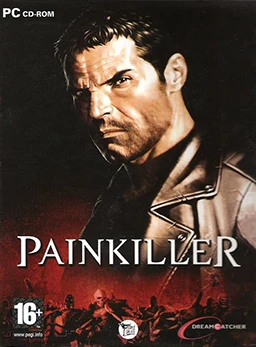
Armor Vial
A glowing draught of defiance, refilling your shield against the endless tide of Hell.

The Armor Vial is a pickup item found throughout the Painkiller first-person shooter series, developed by People Can Fly. It functions as a restorative item that replenishes the player's armor pool, the secondary damage-absorption layer that sits ahead of the health bar. In a franchise defined by relentless demon hordes and high-impact combat, the Armor Vial serves as a critical breathing room between engagements, allowing the protagonist to re-enter the fray with a renewed buffer against the next wave of hellish assault.
Visually consistent with the series' gothic-industrial aesthetic, the vial is typically rendered as a small glass or ceramic container filled with a glowing liquid, placed on the ground or mounted on walls in corridors, arenas, and boss chambers. It is not a weapon but a sustain item, woven into the level design to reward exploration and position players for the next encounter.
- Type
- Pickup / Restorative item
- Function
- Restores player armor (damage-absorption layer)
- Franchise
- Painkiller
- Developer (original series)
- People Can Fly
- Setting
- Hell / demonic realms
- Category
- Sustain / defensive resource
Lore & Background
In the cosmology of Painkiller, the protagonist Daniel Daimio is thrust into the layered hells after a ritual gone wrong. The Armor Vial is not merely a game mechanic; within the fiction it is a residue of the arcane energies that saturate the demonic environment. The liquid inside is a condensed fragment of the same infernal force the demons wield, repurposed by the player's own will to reinforce the flesh and bone that stand between him and the next horde.
The vials appear in the corridors of the Netherworld, in the bone-throned halls of the Archdemons, and in the industrial forges where the demons mass their legions. Their placement is deliberate: a corridor choked with imp archers, a cathedral of screaming faces, a boss arena where the ground trembles. Each vial is a small mercy in a landscape designed to grind the living to dust, a reminder that even in Hell, the dead leave behind fragments of power that the living can claim.
The armor system itself reflects the series' design philosophy: you are expected to be hit, to feel the impact, to lose the outer layer before the inner one bleeds. The Armor Vial is the moment of reset, the brief pause where the player straightens their spine, checks their weapon, and steps back into the meat grinder.
In Their Own Story
The corridor stank of sulfur and old blood. Daniel's armor bar was a thin red sliver, barely a whisper against the next volley of hellfire. He rounded the corner, boots crunching on shattered obsidian, and there it was—perched on a broken altar, the vial catching the ember-light. The liquid inside pulsed a deep amber, almost alive. He reached down, snatched it, and felt the warmth flood through his chest plates like a second heartbeat. The red sliver swelled, rebuilt itself. Somewhere ahead, the grinding of a thousand demon joints announced the next wave. He smiled. Not yet.
Reader's Guide
The Armor Vial is not a weapon you slot into a hand; it is a pickup you grab with a brief animation, and its effect is immediate and automatic. In the Painkiller games, armor functions as a secondary pool that absorbs a percentage of incoming damage before your health is touched. The vial restores that pool, giving you a fresh buffer against the next burst of hellfire, melee strikes, or boss attacks.
In terms of feel, the pickup is quick—a short reach-and-collect animation, a distinctive chime or whoosh in the audio mix, and a visible flash on the HUD armor bar as it refills. It is designed to be grabbed on the run, often mid-combat, so the rhythm of the game is: fight, grab, fight again. You are not supposed to stop.
The vials are placed by level designers in strategic spots: after a heavy encounter, in a side corridor that rewards a quick detour, or on the ground after a boss phase. They are not locked behind progression; they are environmental. Their visual design matches the series' dark, gothic-industrial tone—small glass or ceramic vessels with a glowing liquid, often amber or green, set against bone, iron, and ash.
What makes the Armor Vial a fan-favorite element of the combat loop is the tension it creates. You know the next wave is coming. You know the demon ahead of you is reloading its flamer. And you have two seconds to decide: push forward, or sidestep for the vial. That split-second choice, repeated dozens of times per level, is the heartbeat of Painkiller's combat design.
Did You Know?
- The original Painkiller (2004) and its 2022 reboot were both developed by the Polish studio People Can Fly, known for their emphasis on visceral, high-octane combat.
- In the Painkiller series, armor functions as a separate damage-absorption layer ahead of health, meaning the Armor Vial effectively buys you a second chance before you start losing actual health.
- The franchise's setting places the player in the layered hells of a demonic cosmology, where the environment itself—bone, iron, fire, ash—shapes the visual language of every pickup and weapon.
- Painkiller is known for its mix of firearms, melee weapons, and special abilities, making sustain items like the Armor Vial essential for keeping up with the game's relentless pacing.
More in Weapons & Equipment
Elsewhere in the Painkiller universe
Spotted an error? Know more?
This is a living reference — every entry is fact-audited, and reader corrections feed straight into our audit queue. Suggest an edit · See this site's audit record