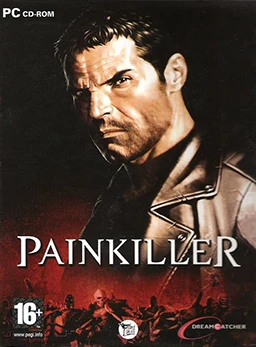
The Brute King
No spells, no tricks — just a mountain of muscle that never stops swinging.

The Brute King is an elite, heavily built demon that serves as a frontline brawler within the demonic hordes of the Painkiller franchise. Where lesser demons rely on numbers or ranged attacks, the Brute King embodies raw, crushing melee force, acting as a living battering ram against the Painkiller and any allied forces it encounters.
It occupies a mid-to-high tier in the enemy hierarchy: more durable and aggressive than standard infantry demons, yet lacking the arcane sorcery of the higher-tier hellknight-class foes. Its role in the games is to close distance quickly, overwhelm the player with sustained close-range pressure, and force the Painkiller to manage spacing and resource use under constant physical threat.
- Type
- Elite melee demon
- Affiliation
- The demonic hordes of Hell
- Combat style
- Close-range / melee brawler
- Threat tier
- Mid-to-high (below sorcerer-class bosses)
- Status
- Recurring enemy type across the Painkiller franchise
Lore & Background
In the cosmology of the Painkiller universe, the armies of Hell are not a single undifferentiated mass. They are stratified: swift hounds for flanking, ranged casters for area denial, and then the Brutes — the anvil upon which the horde's assault is delivered. The Brute King stands at the apex of this physical tier, a specimen bred or forged for a single purpose: to be an immovable, devastating presence in the thick of battle.
Its physiology reflects that purpose. Enormous, barrel-chested, with forearms thick as tree trunks and a hide that shrugs off the kinds of fire the Painkiller typically wields. It does not cast, does not summon, does not retreat. It walks forward, it swings, it slams the ground, and it keeps walking forward. In the narrative texture of the games, these creatures are treated less as individual characters and more as a type of living siege engine — the sound of its footsteps is a warning that the player has been outmaneuvered and must re-engage on its terms.
The Brute King's place in the hierarchy is one of blunt authority. It answers to the higher demonic lords but does not think in their scheming, political terms. Its loyalty is absolute and its intelligence is that of a cornered apex predator: assess, charge, destroy. This makes it both predictable and terrifying, because the player can read its telegraphs but still must survive the very real damage behind each one.
In Their Own Story
The corridor stank of sulfur and old blood. The Painkiller pressed his back against the crumbling wall, watching the far end of the passage where the Brute King stood — a silhouette of ridged muscle and dark plate, its head low, its fists resting on its knees like a man waiting for a bell to ring.
It did not roar. It did not posture. It simply took a step forward, and the floor tiles cracked under the weight. Then another. The rhythm was slow, deliberate, almost patient, which was worse than any charge.
The Painkiller raised the shotgun. The Brute King's head tilted, as if listening to the click of the cylinder. It swung its right fist in a wide arc that sent a shower of stone chips skittering across the floor. The Painkiller rolled, fired, felt the kick of the blast in his shoulder.
The Brute King did not stagger. It took another step.
The Painkiller exhaled, checked his shells, and met the demon's blank, burning gaze. There was no negotiation in those eyes. There never was.
Reader's Guide
Role in gameplay: The Brute King functions as a sustained melee pressure enemy. It closes the gap faster than lesser demons, and once in range it locks into a repeating slam-and-swipe loop that punishes players who stay in close quarters. Its job is to force you to break contact, reposition, and manage your ammo or health under time pressure.
Visual design: Expect a massively proportioned humanoid — broad shoulders, thick neck, forearms that dwarf a normal demon's torso. The hide is dark, often with plates of crude bone or iron fused over the chest and forearms. Eyes are small, low-set, and burn with a dull red or orange glow. The overall silhouette reads as "wall with legs" rather than a sleek fighter.
Attack patterns: The core loop is a heavy overhead slam (wide, slow, high damage) alternating with a horizontal swipe (faster, narrower arc). Some variants include a ground-pound that creates a brief shockwave, or a charge that covers a short distance before it recovers. The key tell before each hit is the wind-up of the arms; reading that telegraph is the primary survival skill.
First appearance: The Brute enemy archetype appears across the Painkiller franchise, with the Brute King representing the elite or leader variant encountered in later stages of a level or as a mid-boss.
Memorable set-pieces: The most defining moment for players is typically a corridor or arena encounter where the Brute King is paired with one or two ranged casters, forcing the player to weave between fire and the demon's closing footsteps. The contrast — the casters' shrieking projectiles against the Brute King's silent, grinding advance — is a signature Painkiller combat texture.
Did You Know?
- The Brute King's entire combat identity is melee; it never casts spells or summons reinforcements, making it the purest 'physical threat' in the Painkiller enemy roster.
- Its design philosophy contrasts deliberately with the sorcerer-class demons in the same games: where they are ethereal and ranged, the Brute King is grounded, slow, and overwhelmingly close.
- In several Painkiller titles, the Brute King's ground-slam attack can break or destroy destructible cover, removing the player's safety and forcing a reposition mid-fight.
- The Brute King's lack of a roar or taunt before attacking is a consistent design choice across appearances — the silence before the swing is meant to feel more oppressive than any vocalization.
More in Characters & Enemies
Elsewhere in the Painkiller universe
Spotted an error? Know more?
This is a living reference — every entry is fact-audited, and reader corrections feed straight into our audit queue. Suggest an edit · See this site's audit record