Stalker
You hear it before you see it, and by then it is already behind you.

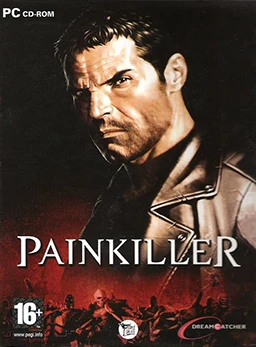
The Stalker is an enemy type encountered in the Painkiller first-person shooter franchise, developed by People Can Fly. Set in a hellish dimension, the series casts players as Daniel Dax, a demon-hunter wielding an arsenal of over-the-top weapons. The Stalker fits within the game's roster of demonic adversaries that test the player's mobility, positioning, and weapon-switching reflexes.
As a stalking-class enemy, it occupies a role distinct from the franchise's more straightforward brutes and ranged spitters, introducing a pressure dynamic where the player must remain aware of threats closing from behind or flanking angles while engaging other foes.
- Role
- Enemy / Stalking adversary
- Affiliation
- Forces of Hell
- Developer
- People Can Fly
- Franchise
- Painkiller
- Genre
- First-person shooter
Lore & Background
In the Painkiller universe, Hell is a sprawling, multi-layered dimension of torment where demons of every shape prowl the corridors of the Damned. Among them, the Stalker is a patient, predatory presence. Where the larger Brutes charge headlong and the Impalers lob their spikes from a safe distance, the Stalker relies on silence, speed, and the element of surprise. It moves through the smoke and ash of the lower pits, vanishing into the architecture of Hell's twisted geometry before reappearing at the player's flank.
The Stalker's design philosophy within the franchise is one of psychological pressure. It does not announce itself with the thunderous roars of a Brute or the visible projectile arcs of a Spitter. Instead, it punishes tunnel vision and complacency. Players who lock onto a single target or sprint down a corridor without checking their six find the Stalker closing the gap in a blur of motion, forcing a frantic weapon swap or a desperate turn.
Across the Painkiller titles, the enemy roster is built around variety in attack rhythm and spatial positioning. The Stalker occupies the niche of the fast, low-profile threat that keeps the player's head on a swivel, complementing the slower, heavier enemies that anchor a room's threat level.
In Their Own Story
The corridor stank of sulfur and old blood. Daniel Dax kept his shotgun leveled at the Impaler ahead, watching it charge its next volley of bone-shards. He fired, and the creature crumpled, gurgling. He exhaled. Turned. The Stalker was already three paces behind him, one clawed hand outstretched, its jaw unhinged in a silent shriek. The shotgun swung. The blast lit the corridor in orange. The Stalker folded, skidding across the obsidian floor, and the silence that followed was the loudest thing in Hell.
Reader's Guide
The Stalker functions as a mobility and awareness test within the Painkiller combat loop. While Brutes and Impalers telegraph their attacks with wind-ups and projectile arcs, the Stalker relies on closing distance quickly and striking from angles the player is not watching. This makes it a counter to players who habitually face a single direction while clearing a room.
Visually, the Stalker is leaner and lower to the ground than the franchise's heavier demons, with a design that emphasizes speed and predatory posture. Its coloration blends into the darker, ash-heavy environments of Hell's lower levels, making it harder to spot in peripheral vision.
In practice, the Stalker punishes players who commit fully to one target. The best counter is to keep your crosshair loose, listen for the audio cues that signal a close-range threat, and be ready to pivot and swap to a close-quarters weapon. It also serves as a natural prompt to use the environment: a quick strafe behind cover or a well-timed area-of-effect weapon can neutralize a Stalker that has closed to point-blank range.
Its role in level design is to keep the player's spatial awareness sharp, ensuring that even during the franchise's signature over-the-top firefights, a quiet threat is always lurking just outside the frame.
Did You Know?
- The Painkiller franchise, developed by People Can Fly, is known for its exaggerated, high-octane combat where enemies are designed to test different aspects of player skill, from raw firepower to spatial awareness.
- Stalking-type enemies in the Painkiller series serve as a deliberate counter to the player's tendency to focus fire on a single target, encouraging constant repositioning.
- People Can Fly, the Polish studio behind Painkiller, later went on to develop the Gears of War series and the cyberpunk title Ghost Recon: Breakpoint's predecessor in their portfolio.
- The Painkiller universe's setting in a multi-layered Hell allows for a wide variety of enemy archetypes, from slow tank-type demons to fast, low-profile stalkers, creating a layered combat rhythm.
More in Characters & Enemies
Elsewhere in the Painkiller universe
Spotted an error? Know more?
This is a living reference — every entry is fact-audited, and reader corrections feed straight into our audit queue. Suggest an edit · See this site's audit record